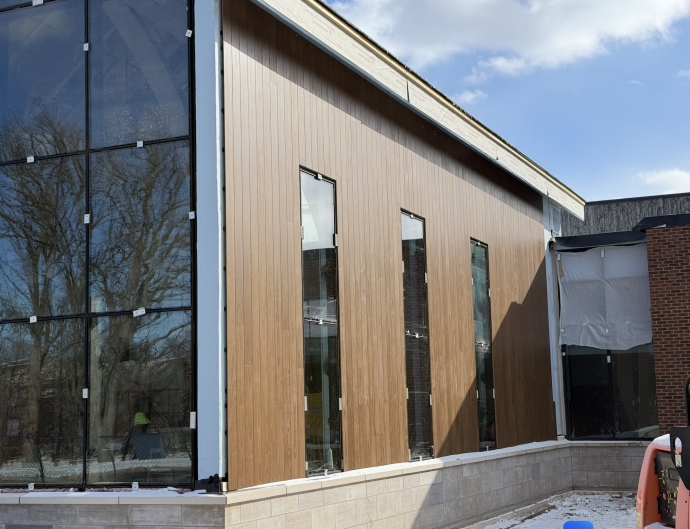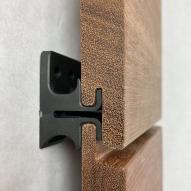

QuickClips, Faster Install
Q and A with Wood Technology Expert Micah Sutfin, MSc from Nova Wood USA.
Q: Can you please speak on the Nova Wood and the ExoClad® QuickClip™ product?
A:Our company was established in 2005 by Steve Getsiv, John McGlocklin, and David Zugman, creating a remarkable international trading company that specializes in wholesale flooring, decking, trailer decking, wood siding, and accessories.
One of the things that that we understood along the way is that we typically deal with wood products that can move a lot once they are put in service.
Wood siding products move a lot in width and that can put a lot of stress on fasteners. So, one of the things that we wanted to do was invent a rainscreen siding clip system that would actually allow wood to shrink and expand. In 2018 we received a utility patent on our ExoClad® QuickClip™ system.
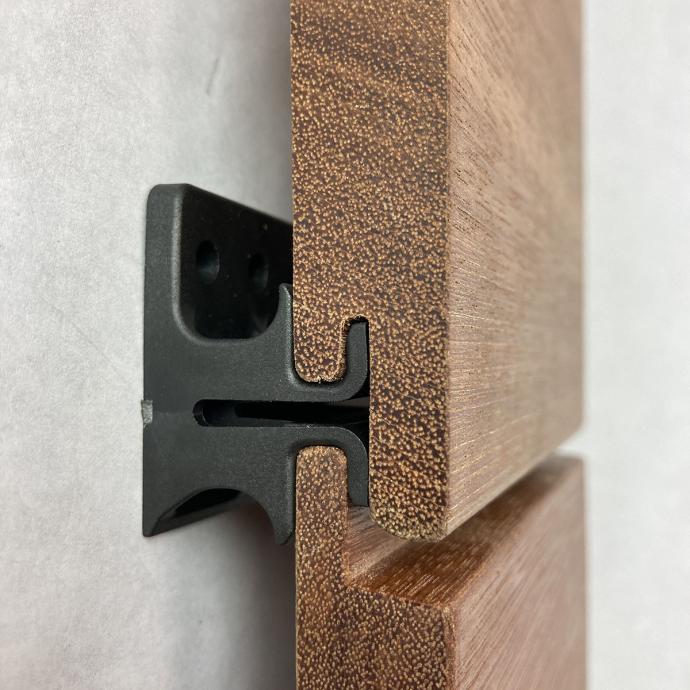
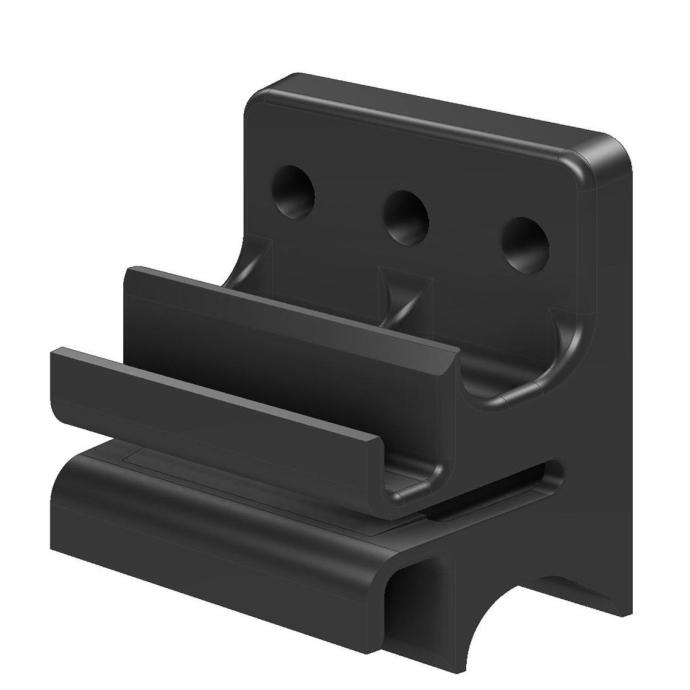
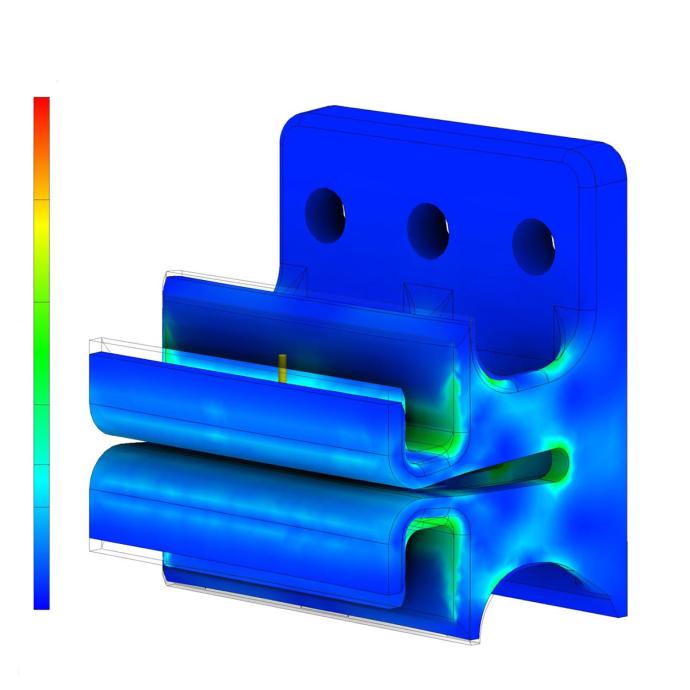
We designed our ExoClad Rainscreen QuickClip specifically to allow for the natural swelling and shrinkage in the widths of individual boards after installation. Our clip is stiff enough to hold the gap perfectly during installation and yet flexible enough to allow the wood swell up to 1/8" in width.
This product works really well for a lot of siding that moves while in service, in width and in thickness as well, but mostly in width.
Because typical siding boards can swell up to 1/8” in width, we designed the ExoClad Rainscreen QuickClip to compress under high pressure to absorb this expansion. When the wood later dries out, the spring action in the clip will move the boards back into place, centered perfectly, and securely fastened to the side of the structure.
We realized quickly that a lot of other folks could also use this product for materials that don't move much because they like the reveal of it. Clients do not want to see nail holes of any kind, just the natural look of the wood. They like the ¾” off-set of the material. There are certain companies, like Accoya® for example, that don't really deal with any movement in their wood, but they still like to use our clips.
They also like to use our clips because of their durability. They're nylon 6/6 sticks with glass infused materials – it's the same material being used for automotive fittings. That makes them really good for high temperatures, cold temperatures and humidity fluctuations, and they last a really long time. So, we have proven durability. Plus, the clips are 100% made in the United States, and they always will be.”
Q: Can you speak on the diversity and usage of the clips?
A: A lot of people use them on various species of wood. We've had them used on thermal hemlock, Accoya®, any tropical hardwood that you can think of, down to western red cedar – people can build this into a lot of different species. It doesn't matter what species you use because the clip can withstand the force. Really the only limitation on the clips is that you don't want to go too wide.
There are no furring strips required for horizontal applications, meaning the siding is going parallel to the ground. It's horizontal. Bear in mind this is all for light frame construction I'm talking about, so we're screwing into studs and plywood. The only furring strip that you need is the very top. You have to cut off the top lip of the board, and then you have to screw that top furring strip into something. Otherwise, you just have the very top exposed. And that everything falls through. You can call it furring. You can call it blocking, but you really just need one for finishing and that's on your top row.
For vertical application, where your sidings going perpendicular to the ground, because this is for light frame construction, you're not going to be able to screw directly into a stud every single time, depending on your spacing. Because your boards are six inches wide, you're [typically] going across a 16-inch span for your on-center studs, then you're going to be missing studs. In our install guide we require that the clips don’t ever get fastened solely to sheathing. So, in that instance, you might have to put a furring strip on there, for example, for a vertical application.
That's for light frame construction. If you were applying this over an existing building that was stucco and you're like, ‘I just want to cover this up, it's a monstrosity,’ well, that's not the same case. You can just drill into it and make your vertical siding all the way around it; you don't need furring strips.
Q: Which leads us to fasteners. Can you talk about them a bit?
A: With specifying things its important to note we don't include fasteners with the clips. Because for a SIP wall, you might want to have a different fastener that goes into that versus steel or masonry. The fastener options are going to be substrate specific.
The inside diameter of this hole is just under a quarter of an inch, so, the outside diameter you need to have a screw in. We refer to these as pan head screws, where the bottom portion of the head is flat.
These are not a traditional wood screw where you have a bugle head; you need a flat pan head screw where the bottom of the head is flat. If you don't have the flat head, then it’s not going to suck the clip into the substrate you're trying to drill it into.
Brad nails and/or finish nails, nails that do not have the holding ability to prevent hardwood from moving, should never be used during installation of hardwood siding. In addition, non-stainless nails can stain your hardwood siding.
There’s three different holes on the clip, so if you need additional support, then you're going to get it from that, by using the additional holes. The holes are positioned to allow the clip to act as both a fastener and a spacer for consistent board spacing.
For vertical application, you have gravity that's just aligning the clips by themselves. But say you wanted to do like a diagonal, then you might need an additional screw added every once in a while, to keep the clip anchored.
Q: How did the relationship and collaboration with Pioneer Millworks begin?
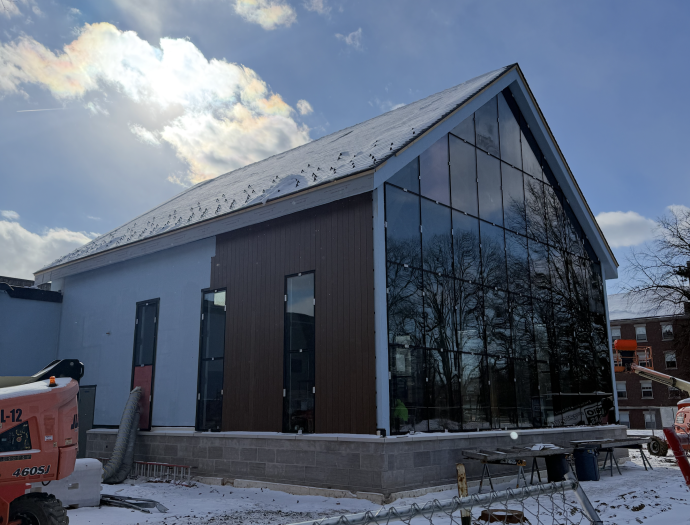
A: Going into our relationship with Pioneer Millworks…Pioneer was looking for a rain screen siding system because architect specifiers are realizing rain screens are something that have historically been around for a while, but people would use furring strips to create the offset gap from your siding to the exterior sheer wall of the structure.
Jonathan Taylor, Pioneer Millworks General Manager, reached out to us because he had seen that we were spec’d with Accoya® and that we were system partners. Our clip has had a lot of success in the field, and Pioneer Millworks likes to source as many US based products as possible, and we thought that fit well with your mantra. The other thing that I really like about the relationship with Pioneer is that Nova and Pioneer Millworks are both “pioneers” in the technical aspects of wood products.
We do a lot of testing on our wood products, and we take ourselves very seriously and we don’t put things out in the market until we verify their performance. I’ve formed this relationship with Jonathan over the last couple of months and what I’ve noticed more than anything is that he is very astute and that Pioneer Millworks’ values align very well with Nova’s core values.”